
Configuration approval
Confirm models, skills, data scope, tools and policy for a specific configuration version.
KIEUGROUP / PRODUCT IN DEVELOPMENT
In developmentBuild AI employees for your business
An AI agent platform in development: turning job requirements into model choices, reusable skills, scoped knowledge, connected tools, permission rules and real-case validation.

A useful AI agent needs more than a model and a prompt. Each role needs a clear job scope, reliable knowledge, the right tools, explicit authority and a way to check its behaviour before it acts.
Describe the role, expected outputs, working context and boundaries. A complete job description is preferred; missing details can be clarified through short questions.
Propose a model based on the task, quality, cost, latency and data constraints. Allow the user to review or change the choice.
Potential provider families include OpenAI, Anthropic, Google and DeepSeek, subject to availability and validation.
Combine role-specific skill packs, such as business analysis, software development or project coordination. Make overlaps and limits explicit.
Multiple skill packs may support one job; they do not grant additional data or tool access.
Use relevant industry knowledge and authorised company materials. Keep public references separate from private, access-controlled sources.
Possible domains include software, construction, finance, wholesale, retail and beauty; each requires its own validation.
Identify the CRM, accounting, email, collaboration or API access the job needs. Request only the permissions required for the intended workflow.
Candidate systems include MYOB, MISA, QuickBooks, Google or Microsoft email, Slack, WhatsApp and Zalo. These are integration directions, not a claim of existing connectors.
Define what the agent may do, what it must never do, and what needs approval. Show the user concrete options and allow additional rules.
Sensitive actions require scoped authorisation; instructions inside the model are not the only enforcement layer.
Use customer-provided or proposed scenarios to review the planned response: “In this situation I would do this. Is that correct?”
Offer Yes, No or Needs changes for behaviour review. Passing scenarios does not authorise every future action.
The intended output is a versioned configuration with selected skills, scoped knowledge, tools, permissions and evaluation evidence, ready for a separate deployment decision.
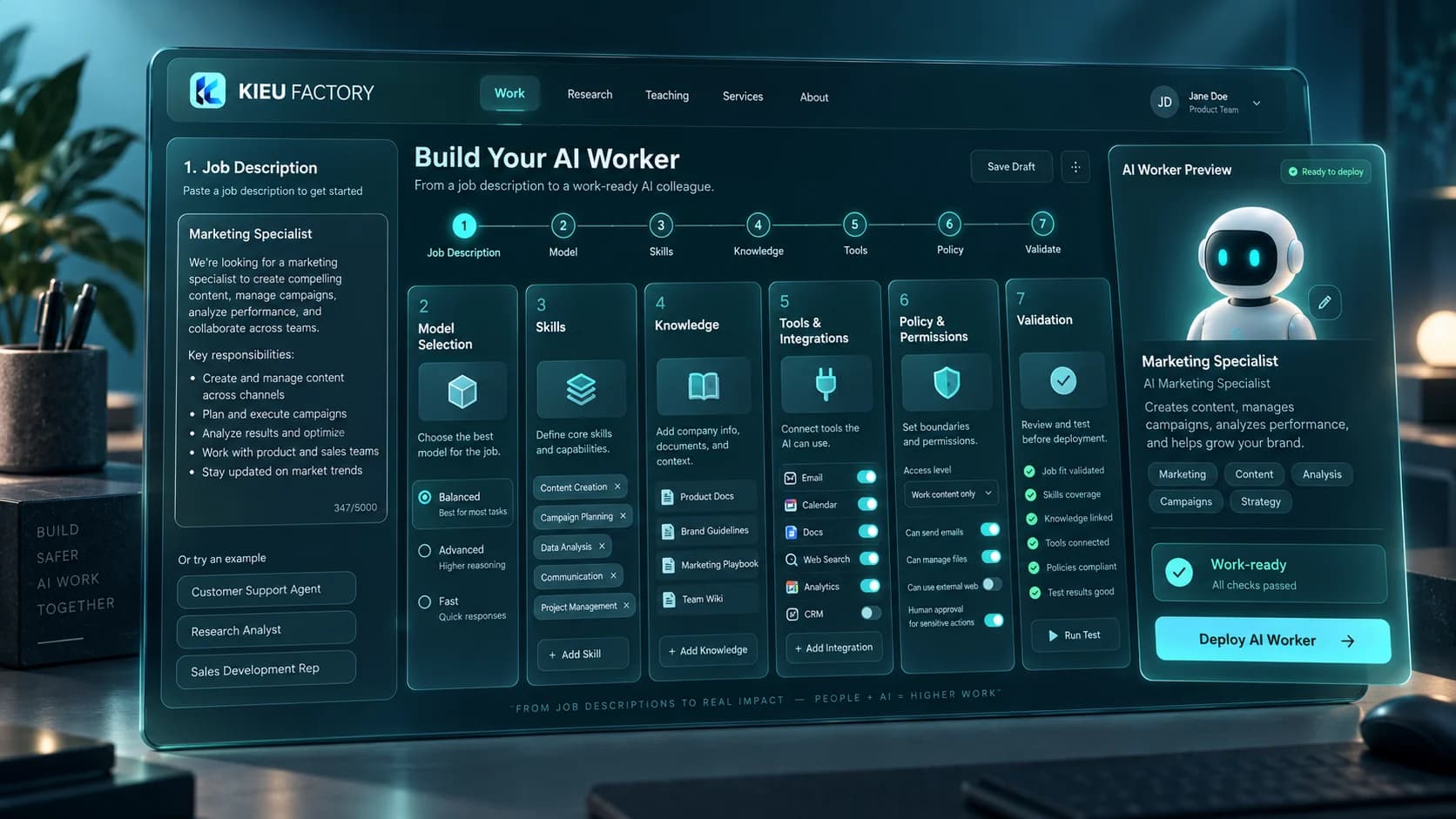
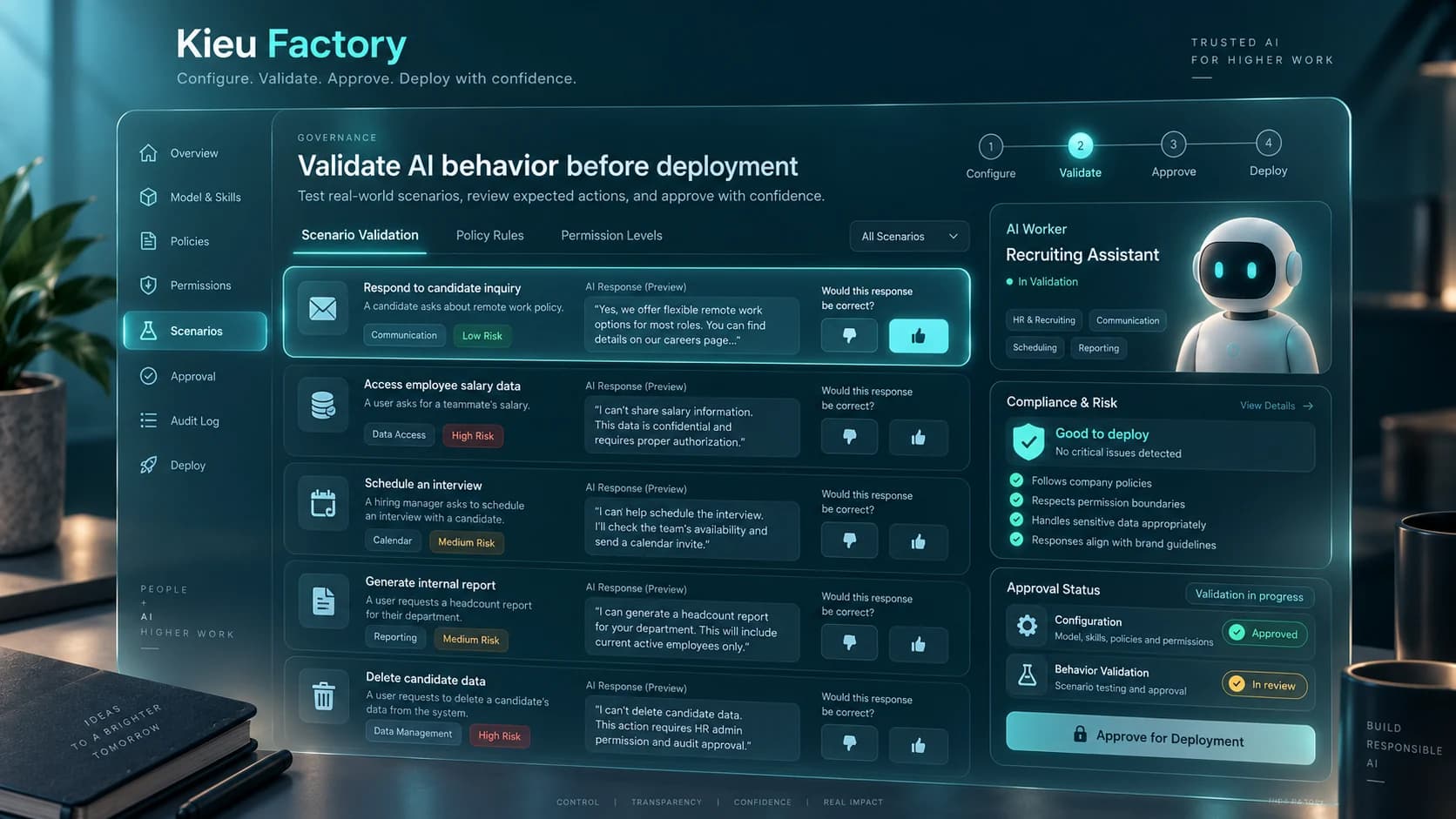
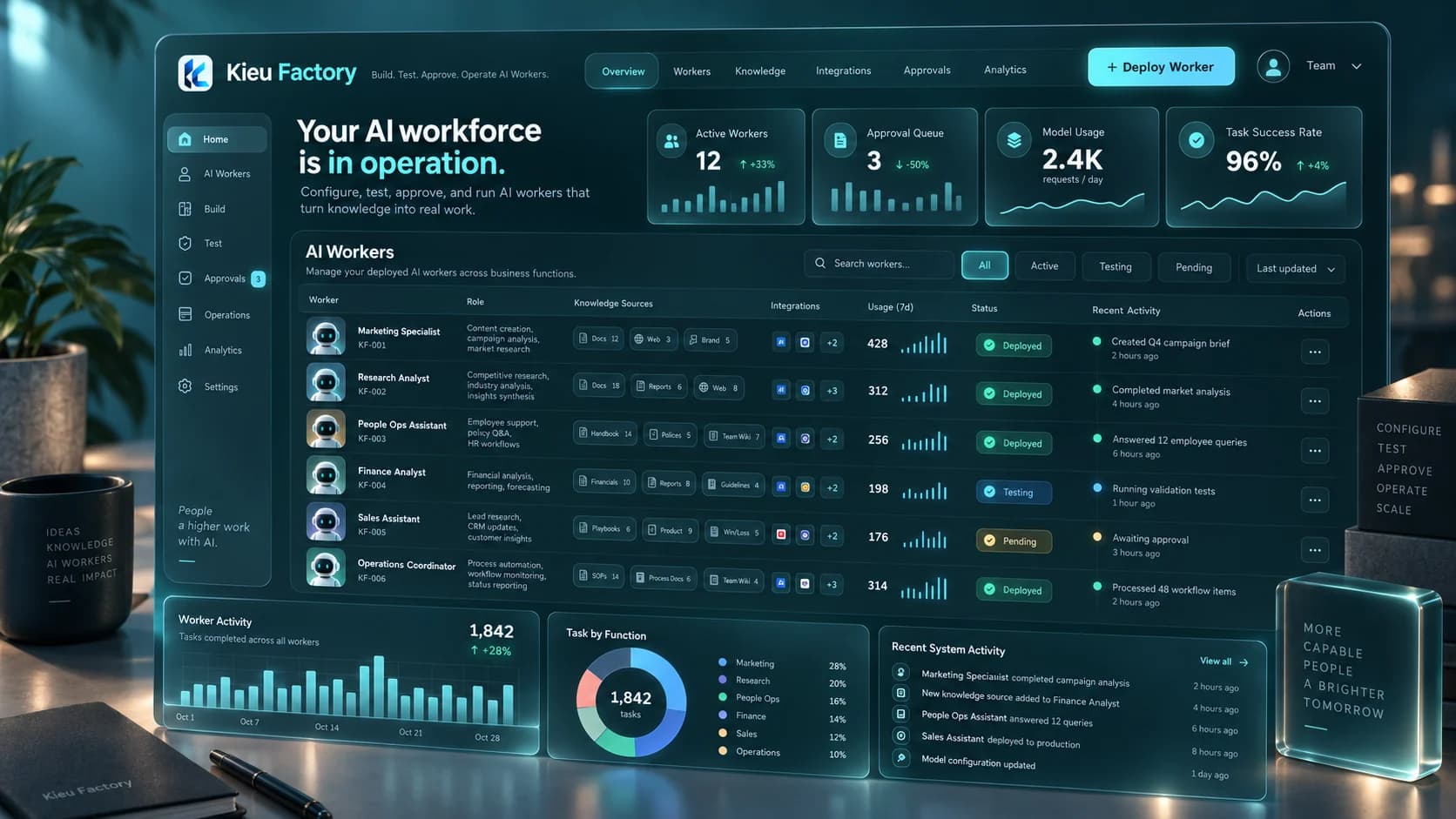
Reviewing an agent’s setup, approving its expected behaviour and authorising a real action are three different decisions.
Confirm models, skills, data scope, tools and policy for a specific configuration version.
Confirm whether the proposed response is appropriate for the scenario. This is evaluation feedback, not permission to execute.
Review the actual recipient, content, data and limits before a sensitive action. Approval applies to that defined action, not unlimited future work.
Requirements drafts, meeting summaries and action tracking, with source references and review.
Brand-aware content drafts and campaign summaries, with approval before publication.
Knowledge-grounded answers and CRM update proposals within explicit customer-data boundaries.
Code and test proposals within repository permissions, with separate review before merge or deployment.
Current public status: in development. The direction is defined; the visuals show intended workflows. Specific implementation milestones, integrations and release dates will be communicated when verified.
The product is in development. This page presents the planned experience rather than a publicly available agent service. Contact KieuGroup to discuss a use case.
No. Named tools and providers illustrate possible integration directions. Availability depends on APIs, permissions, implementation and validation for the selected workflow.
No. Configuration review, scenario validation and action authorisation are separate. Sensitive actions need their own scoped approval.
No. The visuals are AI-generated future-interface concepts. All displayed agents, performance figures, usage and activity are illustrative.
The intended design separates public knowledge from authorised private sources and applies access boundaries and review. Production security controls and data-handling arrangements must be validated before real deployment.
KEEP EXPLORING
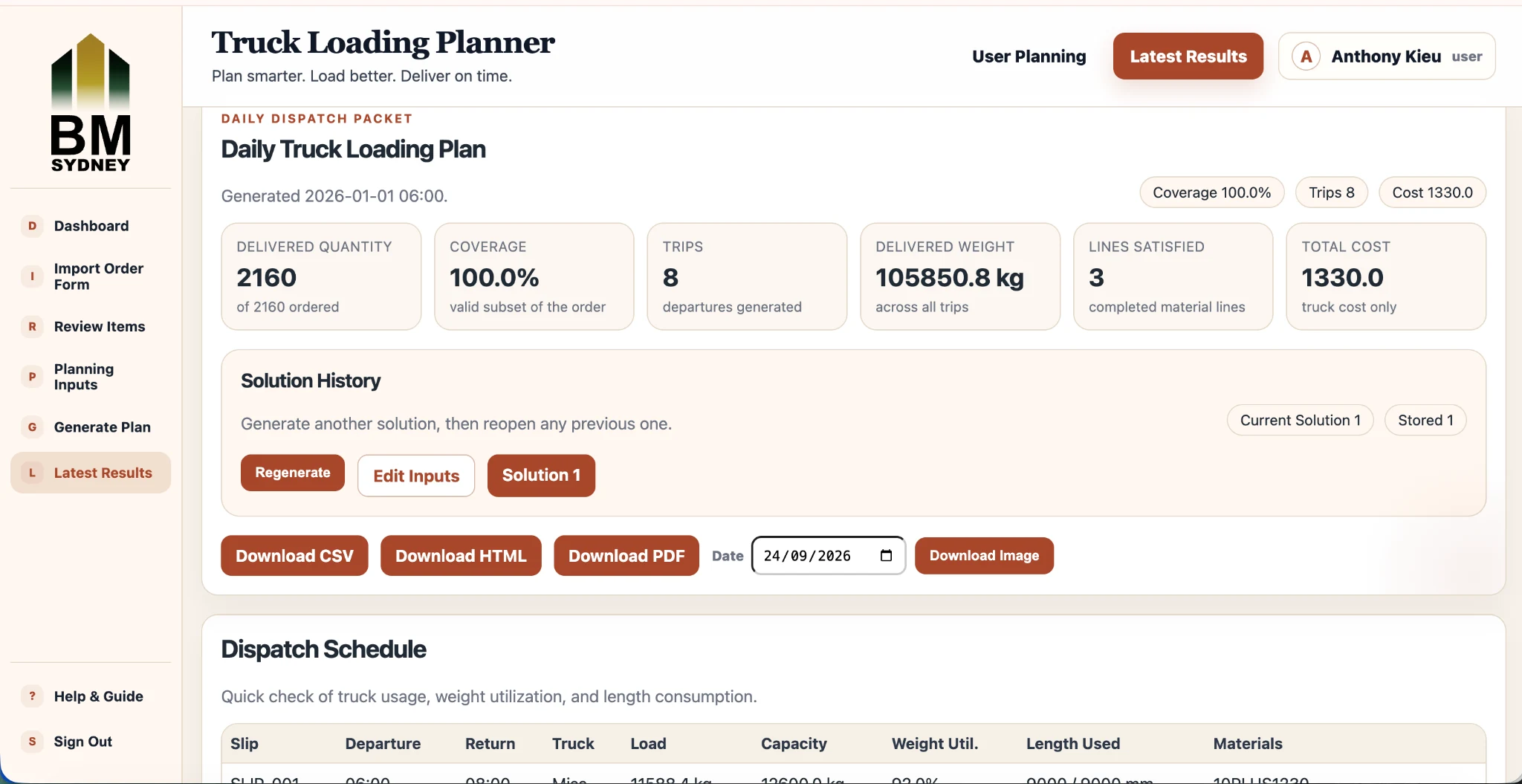
A planning system that turns a manual, rule-heavy task into a faster, more consistent workflow.
Open Live AppBring costs, customer pricing and margin review into more structured business workflows.

A role-based OpenClaw agent fleet for operations, customer service, order processing, delivery and sales workflows.
Bring a job description or a workflow you would like to improve. We can discuss its boundaries, data needs and review requirements.